FREE EDITION / Story / 5 MIN
The Frame Is an Instruction
Separate what a frame shows from the task it asks you to perform.
By the Oddoscope editorial desk. Times include reflection and are estimates.
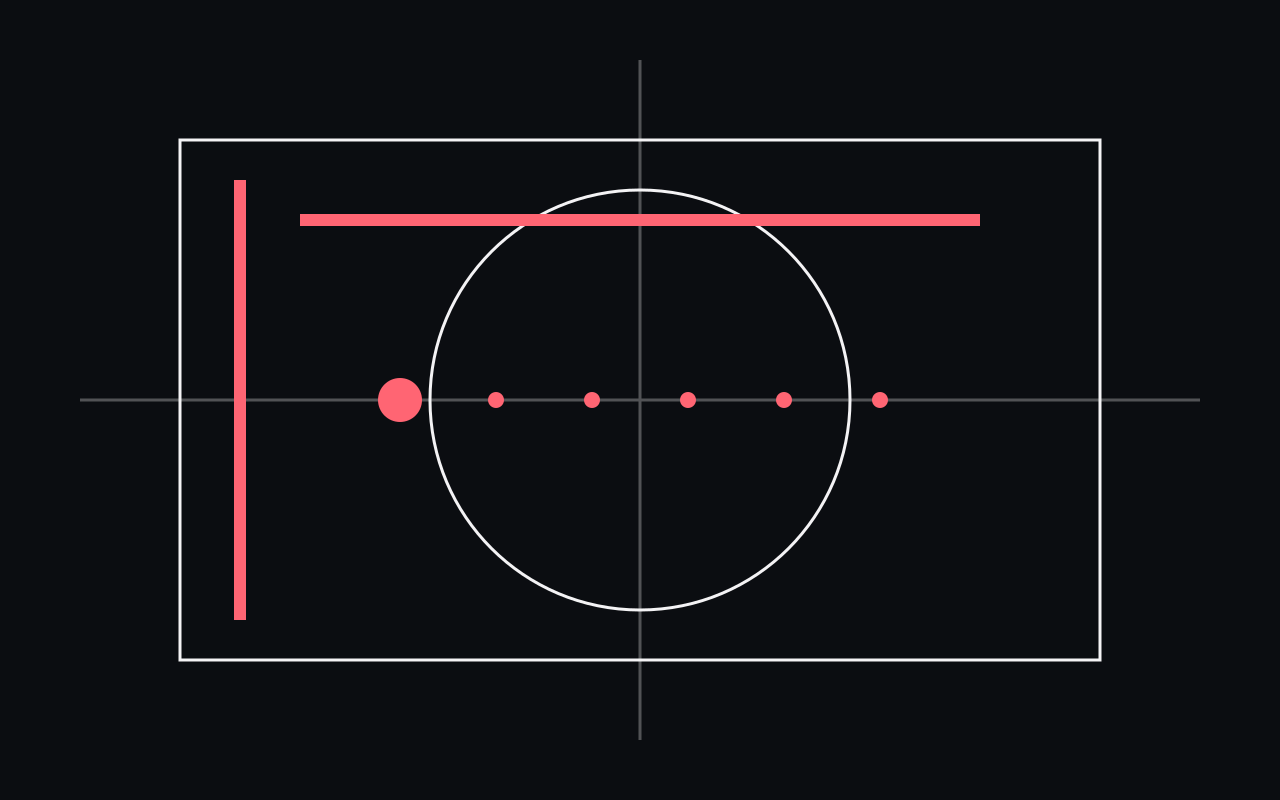
One scene, two assignments
The red frame is not the event. Imagine a fictional drawing of the Bell Street bus yard. There is a red box around one empty parking space. The caption says, “Where have all the buses gone?” Before you have counted anything, the post has offered an assignment: explain an absence. You might begin inventing a shortage, a breakdown or a service cut. The image has not supplied any of those explanations. Now imagine the same drawing with a box around the departure clock and the caption, “First services leave at six.” Your assignment changes. The empty space becomes compatible with buses being out on their routes. Nothing inside the image needed to be altered for the suggested explanation to change. The yard, clock and post are invented for this exercise. There is no real transport claim to investigate.
Attention is useful because it selects
Selection is not a defect you can simply switch off. To find a route number in a busy station, it helps to ignore details that do not answer your question. Trouble starts when the question itself disappears from view. A post can direct attention to an empty space and then present your resulting concern as if it came directly from the photograph. In their original 1999 study, Daniel Simons and Christopher Chabris examined how people doing a visual task could miss an unexpected event. The experiment supports a limited point about attention during a particular task. It does not tell us that a person who misses a social post's context is unintelligent, or that this exercise measures anyone's attention span.
Observation, inference, omission
Try three columns on paper. Under Observation, write only what a viewer can locate: one marked space is empty; several shapes resembling buses are elsewhere; a clock is visible. Under Inference, put the explanation: a service cut has left the yard empty. Under Missing, list the information that would connect them: time, location, the normal pattern at that time, and an actual service record. This is not a demand to distrust every photograph. It is a way to ask for the smallest missing bridge. A departure log may settle the bus question more efficiently than arguing about whether the image feels alarming. A wider crop might help, but it would not establish the date by itself. Different gaps need different evidence.
A five-minute practice
Allow about two minutes for reading and three for this practice. Pick a harmless image from a page you already have open, or keep using the fictional yard. Write one sentence beginning “I can see…” and another beginning “The post wants me to conclude…”. Do not let the second sentence quietly expand the first. Next, invent a second caption compatible with everything visible. The aim is not to make every explanation equally likely. It is to notice when more than one explanation still fits. Finish with one question that could distinguish your two accounts. “Is this fake?” is usually too broad. “When was this taken, and what normally happens here at that time?” gives your next action a shape. Carry that question into the next stop. A frame can organize attention honestly, or steer it unfairly. In either case, being able to name the assignment is more useful than pretending you can view a scene without one.
Sources and editorial notes
Simons & Chabris (1999), Gorillas in our midst — Primary experiment on selective attention. It does not validate this exercise or diagnose individual readers.
Original Oddoscope writing, fictional scenarios and code-authored optical artwork. Linked research is cited, not reproduced. Exercises are educational, not psychological diagnoses or validated ratings.