The Shortest Line Is Not the Whole System
One customer leaves sooner. The room can still wait longer. A fictional repair desk makes the missing measurement visible.
FREE COLLECTION / A FINITE SEQUENCE
Follow four original stories and two working models from a crowded queue to a rule worth revisiting.
Start by noticing the work outside a queue’s visible line. Rebuild a percentage using whole-room counts, allocate scarce capacity, and inspect the feedback in repeated cooperation. End with a four-line rule you can discuss and revisit. Fictional scenarios and explicit model limits keep the conclusions bounded.
6 stops · 32 minutes including reflection. A calculated editorial estimate.
A CLEAR BEGINNING, A FINITE ENDING
One customer leaves sooner. The room can still wait longer. A fictional repair desk makes the missing measurement visible.
Start your next stepSTEP 1
One customer leaves sooner. The room can still wait longer. A fictional repair desk makes the missing measurement visible.
STEP 2
A fictional invitation filter catches most wanted messages. That does not tell you what an alert means. Start with the whole room.
STEP 3
Allocate four work units per shift. Compare completion counts with the old work that remains.
STEP 4
A fictional shared-tool agreement changes when today’s action affects tomorrow’s reply. Inspect the rules before judging the score.
STEP 5
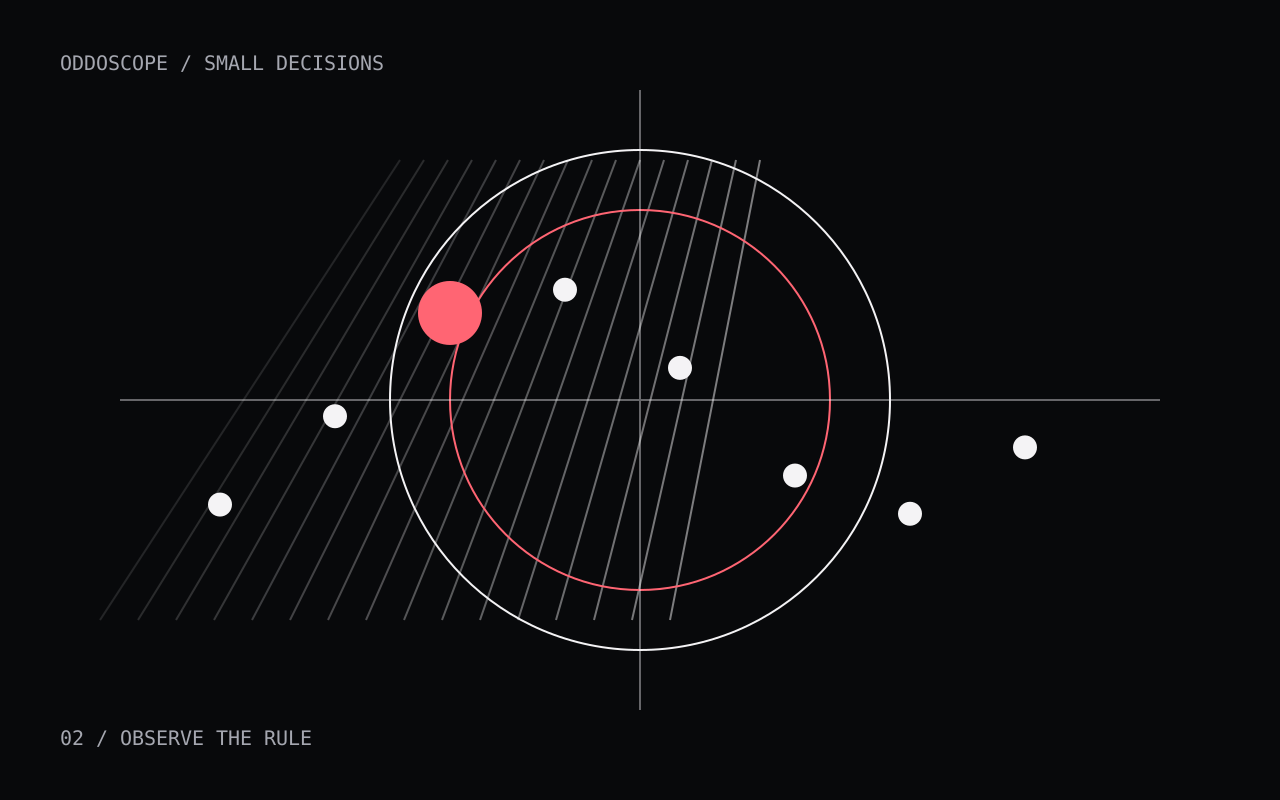
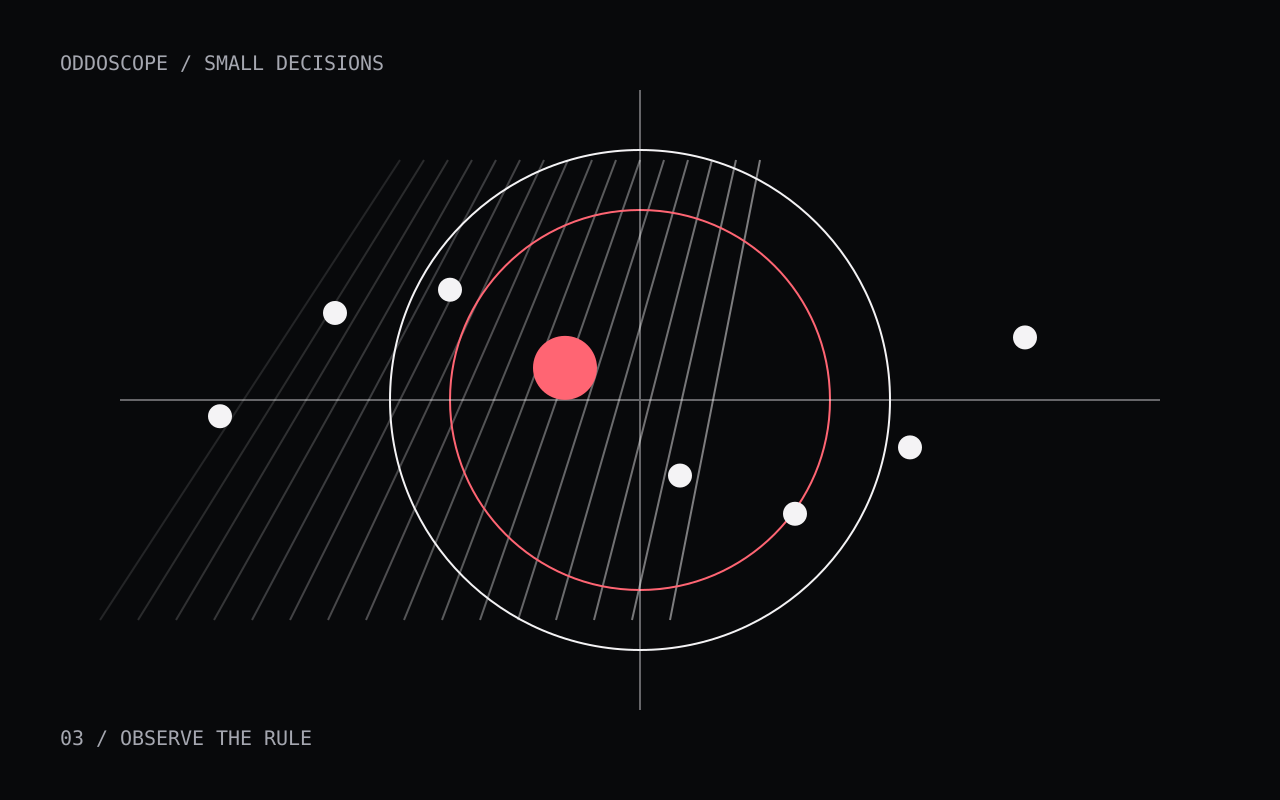
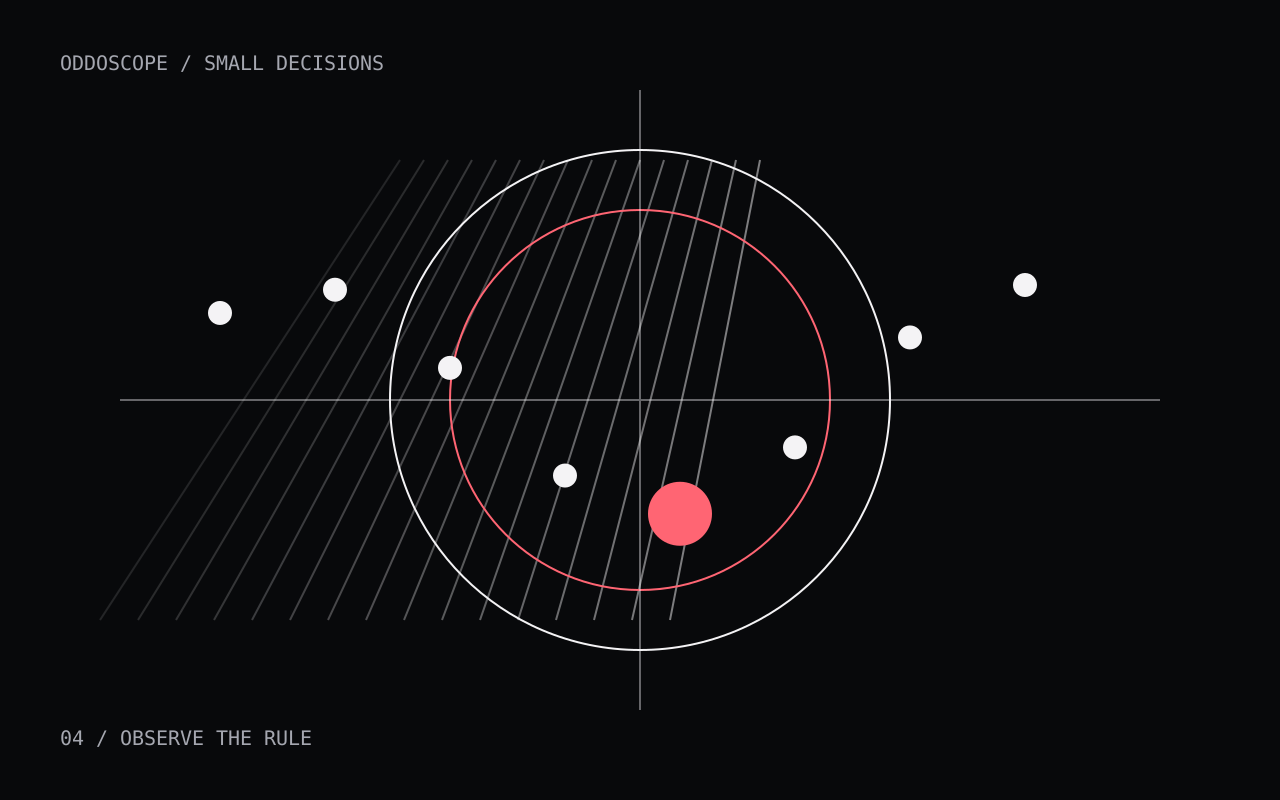
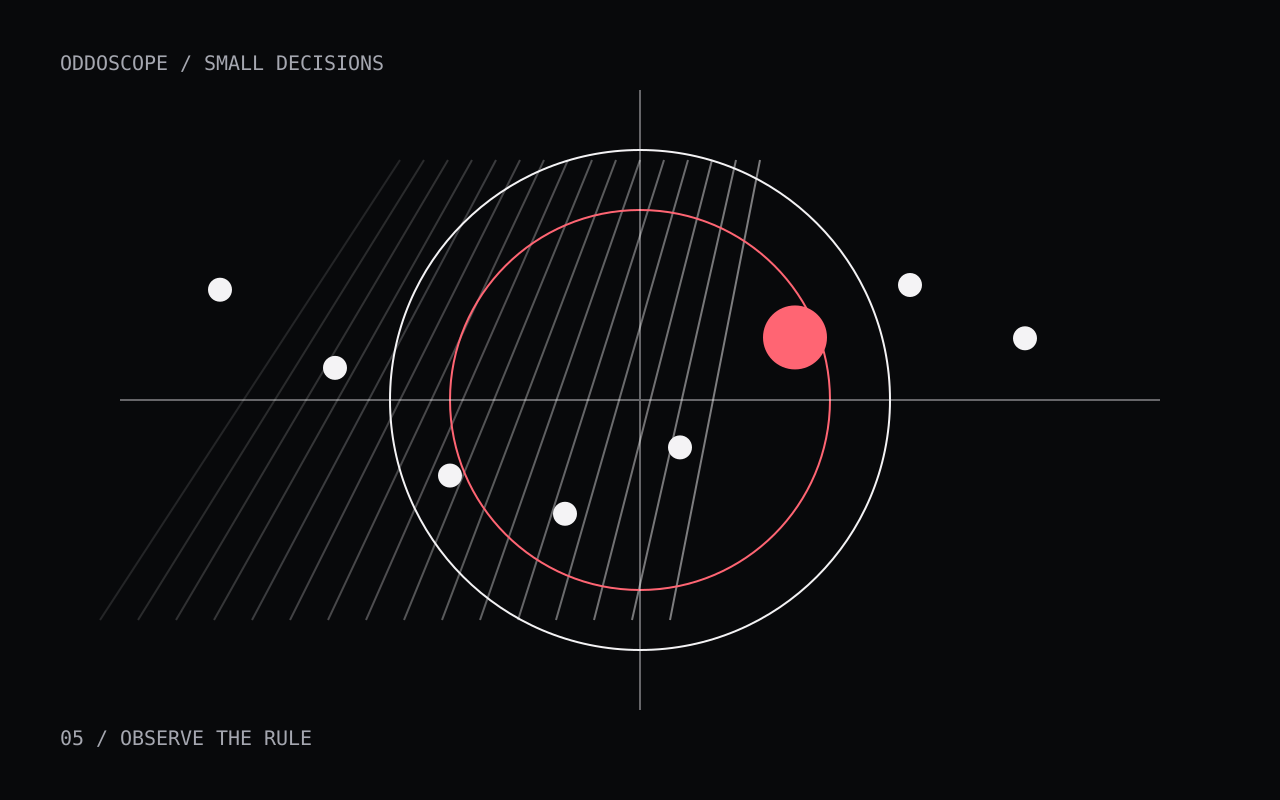
Six rounds, two choices, one visible response rule. Watch how today’s choice changes tomorrow’s partner.
STEP 6
End the route with a fictional shared-resource agreement that can be observed, challenged and revised, instead of a perfect-looking score.